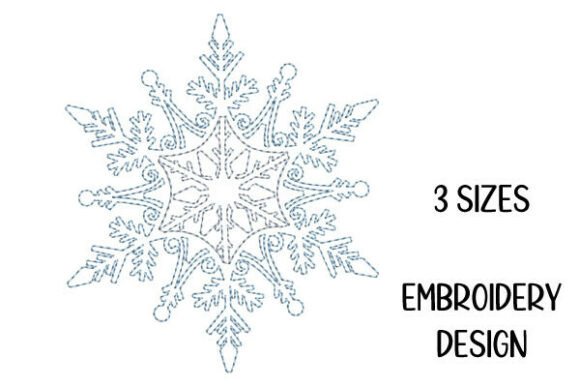
Snowflake Line Art Winter Embroidery
A Clean, Versatile Line Art Snowflake for Small Business Branding
As an embroidery designer who’s developed hundreds of commercial designs for cafes, boutiques, bakeries, florists, and handmade studios, my first impression of Snowflake Line Art Winter Embroidery is immediate: it’s refined, intentional, and quietly confident. The “line-art style” in the title signals minimalism—not fussy ornamentation, but a deliberate, balanced silhouette. That makes it far more than seasonal decoration. It reads as elegant, not kitschy; modern, not nostalgic; and handmade-friendly, without sacrificing polish. For small businesses building brand identity through custom apparel and merch, that balance is rare—and valuable.
Where This Design Delivers Real Business Value
Snowflake Line Art Winter Embroidery shines where subtlety and consistency matter most. Think chest patches on barista aprons at a local café—clean enough to feel professional, wintry enough to signal seasonal warmth without shouting “holiday.” It works equally well as a sleeve accent on staff work shirts, a subtle cap front for a boutique florist’s winter pop-up, or a tasteful corner mark on reusable tote bags handed out with floral arrangements or artisanal pastries.
Because it’s offered in three distinct sizes, scaling is built-in—not guessed at. A smaller version anchors a woven patch for pet brand leashes or kids’ knit hats; the mid-size fits perfectly on the left chest of unisex tees or canvas totes; the larger iteration holds presence on oversized aprons or product packaging accents (like embroidered fabric tags sewn into handmade soap wraps or candle sleeves). As a machine embroidery design, its line-art nature means low stitch density—ideal for high-volume production, faster turnaround, and reduced thread breaks during commercial embroidery.
For Etsy sellers and craft-based brands, this design supports authenticity. It doesn’t compete with your product—it complements it. A snowflake line art motif on a ceramic mug sleeve or linen tea towel feels intentional, not generic. And because it’s inherently scalable and neutral in tone, it integrates smoothly into existing design assets—pairing cleanly with serif logotypes, handwritten shop names, or minimalist icons without visual clash.
Smart Placement & Where to Proceed with Care
While Snowflake Line Art Winter Embroidery is highly adaptable, real-world execution demands attention. On curved surfaces—like the front of structured caps or tapered tote bag handles—test the mid- or smaller size first. Fine line art can visually compress or blur if stretched across tight curves without proper digitizing adjustments.
For embroidered patch use under 2 inches, confirm the smallest version maintains clarity. Thin lines may collapse or disappear entirely if pushed too small—or if stitched on dense, napped fabrics like fleece or heavy terry cloth. Likewise, avoid placing it directly over seams, zippers, or high-friction zones on uniforms unless reinforced with appropriate stabilizer. Dark uniforms require careful thread color selection: stark white or silver metallics offer crisp contrast, but matte charcoal or heather gray threads often read more professionally on black or navy.
Frequent washing? Line art holds up better than filled motifs—but always test on your target fabric texture (e.g., cotton duck, twill, or performance polyester) before bulk production. And never skip the physical stitch-out: what looks perfect in a printable mockup can behave differently on actual substrate.
How It Strengthens Your Brand Identity
Consistency builds trust. When customers see the same refined snowflake motif across your staff’s apron embroidery, your branded tote bags, and the woven label inside your handmade product packaging, they register cohesion—not coincidence. That quiet repetition tells them you’re detail-oriented, intentional, and invested in quality presentation.
Snowflake Line Art Winter Embroidery also elevates perceived value. Unlike clip-art snowflakes, its line-art precision signals craftsmanship—even when used on budget-friendly items like cotton totes or basic tees. For creative studios or local businesses, that nuance matters: it says “we designed this experience,” not “we added a seasonal sticker.” And because it avoids cliché (no glitter, no cartoon faces, no excessive layering), it stays relevant beyond December—extending shelf life for your small business merch.
Practical Notes Every Embroidery Designer Should Apply
Before committing to production, run these checks:
- Test in black and white first. If the design loses legibility without color, reevaluate thread contrast choices.
- Verify performance at your smallest intended patch size. Does the line weight hold? Are intersections clean?
- Review spacing between elements. Line art relies on negative space—ensure gaps won’t close up on textured fabric or with aggressive stabilizer pull.
- Confirm hoop size compatibility. Even simple designs need stable hooping—especially on lightweight or stretchy substrates.
- Stitch it on your actual fabric. Not just a swatch—use the same cut, wash, and finish as your final product.
- Create a client-facing mockup. Show how Snowflake Line Art Winter Embroidery lives on their apron, cap, or tote—not just as a file preview.
- Compare it beside your other design assets. Does it harmonize with your logo, typography, and color palette—or create tension?
- Confirm commercial licensing. Since this is intended for custom apparel, commercial embroidery, and resale, ensure your license permits use on products sold to end customers.
Remember: a strong digital embroidery file is only as effective as its execution. Snowflake Line Art Winter Embroidery gives you a smart, scalable foundation—but your attention to thread choice, stabilizer, fabric behavior, and context turns it into trusted brand language.