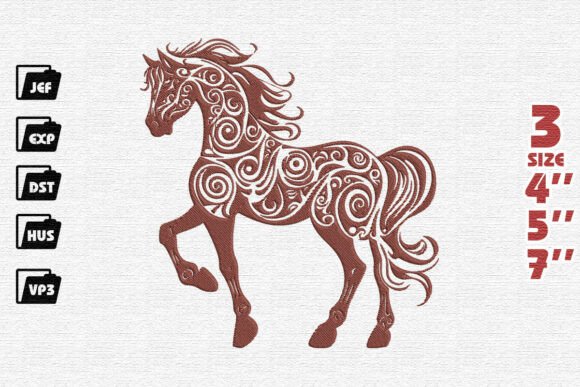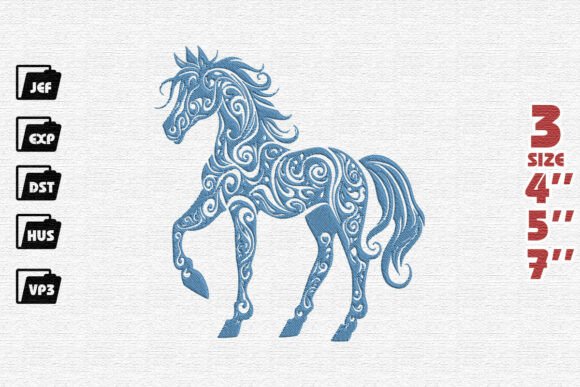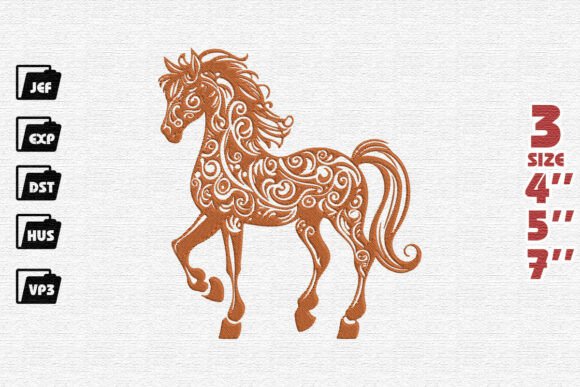
Ornate Copper Horse with Swirls Embroidery Design
A Designer’s First Impression: Grace, Movement, and Intentional Detail
When I opened the Ornate Copper Horse with Swirls Embroidery Design on my embroidery software, I paused. This isn’t just another horse silhouette—it’s a study in controlled motion. The prancing pose feels alive, not static; the swirls in the mane and tail aren’t decorative afterthoughts but rhythmic extensions of the horse’s energy. As an embroidery designer who regularly sources from Creative Fabrica for client work, I look for designs that carry *stitching personality*—and this one does. It leans into satin stitch definition for curves, uses subtle fill stitch gradients in the body, and balances open negative space with dense, intentional swirls. Visually, it reads as both vintage-inspired and contemporary—ideal for boutique merchandise or personalized gifts where craftsmanship is part of the story.
Fits Naturally Into Real-World Projects
The Ornate Copper Horse with Swirls Embroidery Design doesn’t shout for attention—it invites closer looking. That makes it especially effective on products where subtlety elevates perceived value: linen pillow covers, organic cotton baby blankets, heavyweight aprons for artisan bakers, and structured tote bags meant for daily use. I’ve already sketched mockups for a seasonal Etsy listing—a set of three kitchen towels, each featuring the horse in a different copper-toned thread palette (antique brass, rose gold, deep bronze) against natural unbleached cotton. It also translates beautifully to sweatshirt embroidery when scaled to 3.5–4 inches wide—clean enough to hold up at distance, detailed enough to reward inspection.
Performance Notes Across Common Fabric & Form Challenges
Real embroidery isn’t theoretical—and neither is testing this design. Here’s what I observed across practical scenarios:
- Small hoop sizes: At its smallest recommended scale (approx. 2.75"), the swirls remain legible, but I recommend avoiding anything below 2.5" unless you’re stitching on stable, non-stretch fabric with high-quality stabilizer. Tiny curls in the tail tighten quickly.
- Stretchy fabric: On cotton-blend t-shirts or ribbed knit caps, I layered medium-weight cutaway + tear-away stabilizer. The design held its shape well—no puckering—but running stitch outlines around key swirls helped anchor the satin elements.
- Dark or textured fabric: On charcoal twill aprons and navy denim patches, I swapped standard 40-weight thread for slightly heavier 30-weight metallic-look copper thread. The contrast lifted the design without needing underlay adjustments.
- Curved surfaces: For a baseball cap front panel, I reduced density by ~8% and added a light tack-down stitch before the main sequence. The horse’s flowing lines adapted smoothly—no distortion in the legs or neck arch.
- Frequent washing: After three cold washes and air-drying, a test piece on a baby blanket retained crisp edges. No fraying in the swirl terminations—suggesting thoughtful digitizing with secure lock stitches.
How It Elevates Your Handmade Product Strategy
This isn’t just a machine embroidery design—it’s a quiet brand amplifier. When used on a custom embroidered patch sewn onto a handmade leather journal cover, it signals intentionality. On a nursery wall hanging, it adds heirloom warmth without cliché. Customers notice the difference between “a horse” and *this* horse—the swirls suggest care, the copper tone suggests sophistication, the prance suggests spirit. That perception directly supports higher price points, stronger product photography (the design catches light beautifully), and improved customer engagement—especially on platforms like Etsy where buyers search for “artistic horse embroidery” or “metallic thread designs.” For craft fair sellers, it’s a conversation starter. For apparel decorators building a signature style, it becomes part of a cohesive visual language alongside complementary botanical or geometric design assets.
Practical Steps Before You Stitch
Before committing to a client order or production run with the Ornate Copper Horse with Swirls Embroidery Design, I always take these steps:
- Run a test on scrap fabric matching your final substrate—especially important for stretchy or napped fabrics.
- Check thread color contrast on both light and dark fabric mockups. Copper tones behave differently on cream vs. black; preview digitally first, then verify physically.
- Review stitch density in your software. If using older machines or lightweight stabilizer, consider reducing density slightly in the densest swirl clusters.
- Confirm hoop size compatibility. The design scales cleanly, but avoid stretching beyond native proportions—preserve the integrity of the leg angles and tail flow.
- Inspect small details post-stitch: the tip of the ear, the curl at the end of the tail, the separation between mane strands. These are telltale signs of quality digitizing—and yours should be crisp.
- Double-check file details and licensing on the Creative Fabrica product page. Commercial use is permitted, but always confirm current terms before selling finished products.
Final Thoughts for Embroidery Designers & Creative Entrepreneurs
If you’re selecting embroidery files for real projects—not just inspiration boards—the Ornate Copper Horse with Swirls Embroidery Design earns its place in a working library. It bridges artistic expression and technical reliability. It works on baby items without feeling juvenile, on apparel without sacrificing elegance, and on home goods without leaning into trend fatigue. It’s not a “filler” design. It’s a considered choice—one that tells customers you pay attention to line, balance, and material honesty. Whether you’re building an Etsy shop around equestrian themes, launching a line of premium kitchen textiles, or offering custom embroidered gifts for weddings and milestones, this design carries weight. Not heaviness—intention. And in handmade commerce, that’s the detail that converts browsers into buyers, and one-time customers into repeat clients.