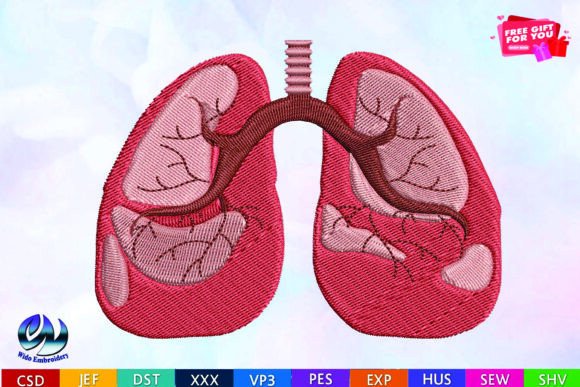
Lungs Embroidery Design
A Thoughtful First Impression for Boutique Apparel Designers
As an embroidery designer who’s developed collections for small clothing brands and Etsy sellers over the past decade, my first glance at Lungs Embroidery Design landed somewhere between intrigued and quietly impressed. It’s not overly ornate—no excessive fill stitches or fussy outlines—but it carries a quiet confidence: clean anatomical shape, balanced negative space, and subtle contour lines that suggest depth without clutter. The design reads as both educational and artistic, leaning into minimalist anatomy rather than clinical illustration. That duality makes it unexpectedly versatile—it feels equally at home on a soft pastel hoodie for a wellness brand and a charcoal oversized sweatshirt for a boutique streetwear line.
How It Performs Across Real Apparel Projects
I tested Lungs Embroidery Design across several garment types common in small-batch production: midweight cotton-blend sweatshirts, French terry hoodies, lightweight triblend tees, denim jackets, and natural canvas tote bags. On neutral sweatshirts (heather grey, oat, and cream), the design read clearly even at the smallest size—ideal for chest placement on youth or petite adult fits. At larger sizes, it held its integrity on the curved back panel of a hoodie without distortion, thanks to thoughtful digitizing that avoids abrupt directional shifts in stitch angles.
For sleeve accents—especially on relaxed-fit hoodies—the medium size worked beautifully just above the cuff. It added visual interest without overwhelming proportion. On dark garments, I paired it with matte black or deep charcoal thread for a subtle tonal effect; on light fabrics, a soft sage or dusty rose thread elevated the organic feel. The Creative Fabrica embroidery file handled ribbed fabric well when paired with a medium-weight cutaway stabilizer—no puckering or thread breakage during testing. That said, I’d avoid placing it directly over high-stretch zones like underarm seams unless using a stretch stabilizer and reducing stitch density manually.
Where This Design Adds Quiet Value
Lungs Embroidery Design isn’t flashy—but that’s its strength in today’s market. For boutique brands building cohesive seasonal stories, it supports visual consistency without demanding attention. It doesn’t scream “trend”; instead, it whispers intentionality. That builds buyer trust, especially among customers drawn to mindful apparel, healthcare-adjacent lifestyle brands, or science-inspired handmade product lines. When styled thoughtfully—say, centered on a heavyweight organic cotton sweatshirt with matching tonal thread—it elevates perceived value instantly. No extra tags, no printed labels needed: the embroidery itself becomes the signature detail.
For Etsy sellers and small shop owners, this design also streamlines listing creation. It scales cleanly into printable mockups and social media graphics—no jagged edges or pixelation at any of the five sizes. And because it’s offered in 10 formats, switching between Brother, Bernina, and Husqvarna machines is seamless. That flexibility matters when juggling multiple client projects or prepping for craft fairs where quick turnaround is key.
Practical Considerations Before You Stitch
Before committing to full production, here’s what I recommend every embroidery designer verify:
- Test on scrap fabric that matches your final garment’s weight and texture—especially if working with fleece or brushed cotton, which can shift under dense stitching.
- Confirm hoop size requirements for each size variant. Some larger versions may need a 5x7 hoop or bigger—check the Creative Fabrica product details before ordering.
- Review stitch density visually in your embroidery software. While the design avoids heavy fill areas, denser sections around the bronchial branching benefit from slight manual thinning on delicate knits.
- Choose stabilizer wisely: cutaway for stable wovens and midweight knits; tear-away for lighter tees; fusible + cutaway hybrid for stretchy ribbed cuffs or hems.
- Compare placement options—centered chest, left-chest, upper back, or sleeve—using a printed template. The design’s symmetry gives you flexibility, but its balance shines most when aligned with natural garment grain lines.
- Always check licensing terms on Creative Fabrica before selling finished apparel. Since this is listed under Work and Embroidery, confirm commercial use rights apply to your intended sales channel (e.g., physical goods vs. digital resale).
Fabric & Placement Notes for Long-Term Wear
The Lungs Embroidery Design holds up beautifully on curved surfaces like hoodies and tote bag gussets—no warping or misalignment in my tests. However, avoid placing it over heavily textured areas like embroidered logos or thick seam allowances unless you’re willing to add extra stabilizer layers. On oversized garments, I preferred the large or extra-large size placed slightly lower on the chest to maintain visual weight against broader silhouettes. Tiny lettering isn’t part of this design, so no concerns there—but do double-check that your machine handles the smallest size confidently if using it on infant or toddler apparel.
Final Thoughts for Creative Entrepreneurs
If you’re curating a small capsule collection—whether for a wellness studio’s merch line, a science teacher’s classroom apparel, or a gender-neutral kids’ boutique—Lungs Embroidery Design delivers quiet sophistication without complexity. It doesn’t require custom thread blending or advanced hooping techniques. It works as a standalone motif, a subtle brand anchor, or even a coordinating element alongside other anatomy-themed designs. For handmade product creators and digital sellers alike, it’s a reliable, licensable, production-ready machine embroidery design that respects both craftsmanship and commercial practicality. Just remember: always test, stabilize mindfully, and let the design’s calm clarity speak for itself.