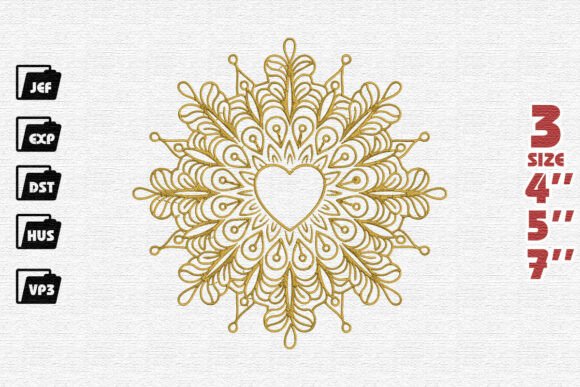
Lacy Golden Heart Mandala Embroidery Design
First Impression: Elegant, Premium, and Instantly Recognizable
As an embroidery designer who’s curated over 200 craft fair booths in the past decade, my gut reaction to Lacy Golden Heart Mandala Embroidery Design is immediate: this isn’t just another mandala—it’s a quiet statement piece. The title alone signals elegance and intention. “Lacy” suggests airiness and precision; “Golden” implies luxury and warmth; “Heart Mandala” merges emotional resonance with sacred geometry. It reads as premium—not rustic, not playful, not minimalist—but richly decorative and deeply handmade. At a glance, customers will register it as special before they even read the price tag.
Where It Shines: Craft Fair & Boutique Product Pairings
This design thrives where texture, light, and intention intersect. On a natural linen tote bag, the golden thread catches ambient booth lighting like liquid metal—drawing eyes from three feet away. As apron embroidery, it anchors the chest area with grace, elevating a functional item into a signature piece for bakers, florists, or boutique baristas. For tea towel embroidery, it works best on tightly woven cotton or bamboo blends—avoid terry cloth or heavily textured weaves where lacy detail blurs.
An embroidered patch made from Lacy Golden Heart Mandala Embroidery Design is a standout small shop product: easy to stitch onto denim jackets, canvas backpacks, or market bags. As a pillow cover embroidery, it adds heirloom weight to neutral linens—especially when paired with tonal gold or cream thread accents elsewhere in the booth display. On structured caps? Proceed with caution: the symmetrical complexity demands precise digitizing for curved surfaces, and dense stitch areas may pucker without proper stabilizer and tension calibration.
Online Performance: Etsy Seller’s Secret Weapon
This design photographs exceptionally well—golden thread reflects light cleanly, and the heart-shaped cutout creates built-in visual contrast that pops against both light and dark backgrounds. As a printable mockup asset, it lends itself to elegant listing banners and cohesive brand storytelling. Unlike busier mandalas, its single-thread rendering keeps file size lean and focus sharp—ideal for mobile shoppers scrolling fast. For Etsy sellers, it supports strong visual hierarchy: one clear focal point, zero visual competition, and instant emotional alignment (love, balance, self-care).
Real-World Production Notes You Can’t Skip
- Stitch density matters: “Intricate and delicate” means fine lacework—and fine lacework means higher stitch count in tight zones. Always test the embroidery file on scrap fabric matching your final product’s weight and drape.
- Thread contrast is non-negotiable: Golden thread reads beautifully on ivory, oat, charcoal, and navy—but disappears on brass, copper, or warm beige fabrics. Always hold swatches under real booth lighting before committing.
- Hoop size & stabilizer strategy: Symmetrical mandalas often require centering accuracy. Confirm the hoop size compatibility before digitizing or purchasing. Use cutaway stabilizer for stretchy fabrics, tear-away for stable wovens, and avoid fusible-only backing for lacy motifs—it can stiffen delicate edges.
- Fabric texture is your co-designer: Avoid highly napped, looped, or uneven surfaces (like some tea towels or corduroy) unless you’ve tested clarity at 100% scale. Tiny details vanish fast on rough terrain.
- Scale flexibility is limited: This isn’t a design that shrinks gracefully. Below 3 inches wide, the heart cutout and lace filigree lose definition. Use it large (4–6") as a focal, or medium (3.5") with generous negative space—not tiny.
Booth Impact & Buyer Psychology
In a crowded craft fair aisle, Lacy Golden Heart Mandala Embroidery Design functions like a visual pause button. It doesn’t shout—it invites. Shoppers slow down, tilt their heads, reach out (gently). That moment of connection is where handmade value crystallizes. When stitched onto a small pouch or pillow cover, it transforms an ordinary handmade product into a giftable keepsake. Paired with consistent branding—think gold foil tags, cream kraft packaging, soft lighting—it reinforces premium positioning across your entire small shop product line.
It also strengthens brand consistency for makers who curate intentional collections: think botanical apothecary brands, slow-living lifestyle shops, or wedding accessory lines. Its symmetry and heart motif subtly signal care, balance, and thoughtfulness—qualities buyers associate with trusted handmade makers.
Designer-to-Designer Checklist Before Selling
- Test the machine embroidery design on at least two fabric types you plan to use.
- Check thread contrast under both daylight and warm bulb lighting—the same way your booth will be lit.
- Review spacing between lace elements: tight gaps may merge on thicker stabilizers or slower machines.
- Confirm commercial embroidery licensing if selling finished goods—many digital sellers restrict resale rights.
- Create one physical finished product mockup before ordering bulk fabric. A photo of the real thing beats any printable mockup.
- Compare how the design reads on light vs. dark fabric swatches—not just digitally, but in hand.
- Inspect the heart-shaped cutout: does it remain crisp after stitching? Does thread buildup distort the shape?
Final Thought: A Timeless Anchor for Your Collection
Lacy Golden Heart Mandala Embroidery Design isn’t a trend-chasing motif—it’s a foundation piece. It performs across categories, scales with intention, and communicates quality without explanation. For cricut and embroidery crafters, it’s a versatile digital embroidery file that rewards attention to detail. For creative entrepreneurs, it’s a rare blend of emotional resonance and commercial practicality. In your next craft fair lineup, let it be the quiet centerpiece—the piece that makes people pause, smile, and say, “I need that.” Because when elegance meets execution, every stitch tells a story worth buying.