Gingerbread House Embroidery Design
First Impression: Festive, Charming, and Instantly Recognizable
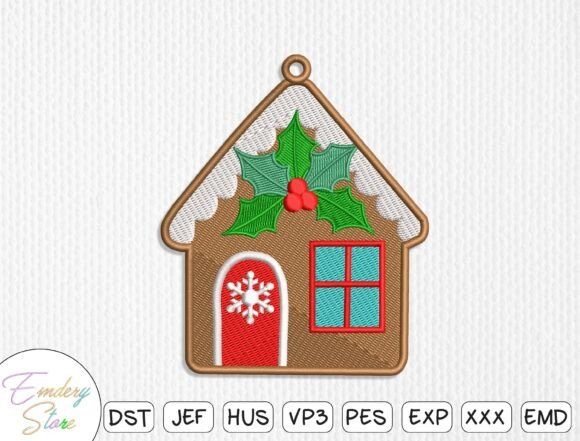
As an embroidery designer who’s prepped over 200 craft fair booths—and watched thousands of shoppers pause at a single stitch—I’ll say it plainly: the Gingerbread House Embroidery Design lands with warm, nostalgic charm. It’s not minimalist. It’s not ironic or abstract. It’s festive, with clear visual storytelling: snowy roof, holly leaves, bright window details—all wrapped in that cozy, handmade cookie-house aesthetic. Customers don’t need to “get it.” They feel it instantly. That’s gold for a crowded holiday market where attention spans are measured in seconds.
Where This Design Shines on Craft Fair Products
This isn’t a one-size-fits-all machine embroidery design—it’s a mood-setter. And mood sells.
- Tote bags: Perfect as a centered 4–5" focal piece on natural canvas or oatmeal linen. The gingerbread house reads clearly from 6 feet away—no squinting required. Pair with cinnamon-brown thread on cream fabric for instant warmth.
- Aprons: Ideal positioned just above the pocket. Its playful scale balances utility and whimsy—especially for bakers and coffee roasters selling at the same fair.
- Tea towel embroidery: Works beautifully on flour-sack cotton—but only if you test first. The holly leaves and window highlights can blur on highly textured surfaces unless stitch density is well-managed.
- Embroidered patches: A standout small-shop product. Trimmed and backed, this design becomes a collectible. Customers love attaching them to denim jackets, backpacks, or even holiday gift tags.
- Pillow covers & pouches: At 3–4", the Gingerbread House Embroidery Design feels intentional—not cramped. Its rounded shapes soften sharp corners and add tactile holiday cheer to any handmade gift bundle.
- Caps & curved surfaces: Proceed with caution. The snowy roof line and tiny window panes may distort without precise digitizing for curve compensation. Not ideal for untested cap production runs.
What Makes It Sell—Beyond Cuteness
It’s not just festive—it’s shoppable. The Gingerbread House Embroidery Design delivers immediate emotional resonance (nostalgia + comfort), strong visual contrast (light windows against dark roof), and clear seasonal relevance. At a craft fair, that translates to faster decisions, higher perceived value, and stronger booth cohesion—especially when paired with coordinating red-and-cream packaging or twine-wrapped tags.
For Etsy sellers and digital embroidery file shops, this design performs well in listings because it photographs cleanly. Bright windows pop on white backgrounds; holly leaves add organic texture without clutter. It also scales gracefully for printable mockups—whether you’re showing it on a rustic apron or a modern market bag.
Production Reality Check: What You Must Test Before Booth Day
I’ve seen too many beautiful designs fail under real-world conditions. Here’s what demands your attention before cutting fabric or loading hoops:
- Stitch density matters. That “snowy roof” effect often relies on tight satin or fill stitches—if over-digitized, it’ll pucker on lightweight cotton or bleed through thin tea towels.
- Holly leaves and window details shrink fast. Below 2.5", fine stems and pane lines vanish. Always run a 2" test on scrap fabric matching your final product’s weight and texture.
- Thread contrast is non-negotiable. On dark fabric? Use metallic silver or ivory thread for windows—don’t assume standard white will read. On busy prints? Skip it entirely—the design needs breathing room.
- Stabilizer choice changes everything. For textured towels or thick denim, cutaway + tear-away combo prevents shifting. For lightweight linens, a light-weight fusible stabilizer preserves drape.
- Hoop size and placement affect flow. If the Gingerbread House Embroidery Design requires a 5x7 hoop but your tote bag gusset is narrow, reposition or resize early—don’t wait until fair morning.
Smart Pairings for Stronger Brand Consistency
Customers remember *collections*, not single designs. The Gingerbread House Embroidery Design pairs naturally with other cozy Christmas motifs—think snowflakes with open centers, simple candy cane stripes, or minimalist wreaths. Keep thread palettes tight: cream, cocoa brown, forest green, and a single pop of berry red. That consistency makes your booth look intentional, not scattered—even if you’re only offering three products.
For small shop owners building a recognizable voice, this design supports brand warmth without leaning into kitsch. It feels handmade, not mass-produced—especially when stitched with visible texture (like matte cotton threads) rather than ultra-glossy rayon.
Final Designer Notes Before You Launch
This isn’t just about stitching—it’s about trust. Your customers trust your eye, your quality, and your judgment. So honor that by doing these six things:
- Run a physical test on the exact fabric you’ll use—not just muslin.
- Check thread contrast under both daylight and warm booth lighting.
- Review spacing between holly leaves and roof edge—tight gaps can disappear in stitching.
- Confirm hoop size compatibility with your most-used embroidery machine.
- Create at least one finished product mockup—not just a digital preview—to assess real-world impact.
- Verify commercial licensing status. If you plan to sell finished products (not just the digital embroidery file), ensure your license permits commercial embroidery use.
The Gingerbread House Embroidery Design doesn’t need to be complicated to succeed. It needs to be clear, consistent, and confidently executed. When those three things align, it stops being decoration—and starts becoming a reason customers choose your booth, click “add to cart,” and come back next year.