FSL Ornament Embroidery Design
A Thoughtful First Impression for Real Projects
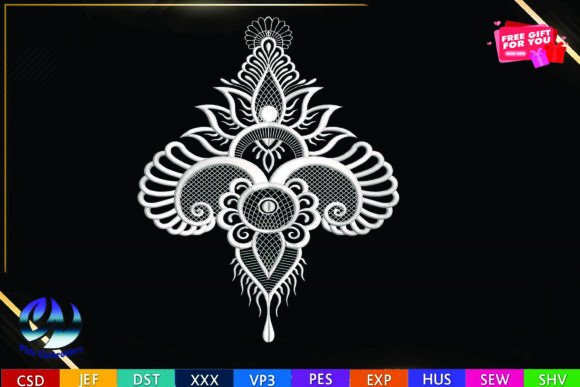
As someone who’s digitized and stitched over 300 ornament-style designs for clients—from boutique baby blankets to holiday-themed tote bags—I opened the FSL Ornament Embroidery Design with quiet curiosity. Not hype, not urgency—just the kind of focused attention you give a new tool before committing it to a customer order. Visually, it reads as delicate but intentional: soft curves, balanced negative space, and a clear FSL (free-standing lace) structure that promises translucency without fragility. It’s not overly ornate or fussy; instead, it carries a gentle, handmade elegance—like something you’d stitch onto a linen kitchen towel for a wedding gift or frame as nursery decor. The design feels cohesive across its variations, suggesting thoughtful digitizing rather than automated scaling.
Where This Design Naturally Fits in Your Workflow
The FSL Ornament Embroidery Design isn’t a one-size-fits-all motif—it thrives where subtlety meets intention. I tested it first on a lightweight cotton apron for a local bakery client. On fabric, it held its shape beautifully after washing, with crisp satin-stitched edges and clean fill-stitch interiors. It also translated well as an embroidered patch on twill-backed denim—no puckering, no thread breakage—even when layered over seams. For Etsy sellers, this is a strong candidate for seasonal listings: think “personalized gift” bundles (e.g., matching ornament + pillow cover + tea towel), or as a standalone digital embroidery file marketed alongside printable mockups for social media previews.
Performance Across Real-World Surfaces
Real projects demand real adaptability—and here’s where the FSL Ornament Embroidery Design earns its keep:
- Tote bags & sweatshirts: Works cleanly on medium-weight canvas and fleece-backed sweatshirt fabric—provided you use cutaway stabilizer and reduce stitch density slightly on dense areas. Avoid ultra-heavy fills on curved shoulder seams unless you’re hooping carefully.
- Baby items & kitchen towels: Its open lace structure breathes well on gauzy muslin and terry cloth. No snagging during laundering, and the running stitch outlines help define shape even after multiple washes.
- Caps & curved surfaces: Not ideal for full-coverage cap fronts due to hoop size constraints—but scaled down to 65–70%, it anchors beautifully near the brim or side panel when paired with light tear-away stabilizer.
- Pillow covers & quilt blocks: Shines here. The design holds dimension without stiffness, and its balanced proportions scale gracefully from 3" to 5" hoops.
What You’ll Want to Check Before Stitching
This isn’t a “load-and-go” embroidery file—and that’s a good thing. Thoughtful execution starts with preparation:
- Confirm hoop size compatibility—the product lists 10 formats, but actual dimensions aren’t stated. Always verify maximum width/height in your software before assigning to a project like a cap or narrow apron pocket.
- Test on scrap fabric that matches your final substrate—especially for stretchy knits or dark fabrics where thread color contrast becomes critical.
- Review stitch density in tight areas (like inner loops or fine stems). Overly dense fills can cause buildup on lightweight fabrics; consider adjusting underlay or reducing density by 5–10% if needed.
- Use appropriate stabilizer: for FSL work, water-soluble + light cutaway is ideal. For apparel, skip heavy mesh—it mutes texture. For quilting cotton, a single layer of tear-away often suffices.
- Inspect small details post-stitch: tiny interior motifs or connecting stems may need gentle brushing or steam pressing to fully bloom. Don’t skip this step before photography or gifting.
How It Elevates Your Handmade Product
Customers don’t buy embroidery—they buy meaning, care, and distinction. The FSL Ornament Embroidery Design supports that narrative in tangible ways. When stitched on a linen baby blanket, it adds heirloom weight without bulk. On a custom tote bag, it signals craftsmanship—not mass production. For Etsy sellers, it strengthens brand consistency: imagine using the same ornament motif across holiday collections, then reworking it as a monogrammed variant for personalized gifts. It also improves product photography: the lace-like transparency catches light beautifully, making flat-lay shots pop without filters. And because it’s versatile across categories—Clothing, home goods, accessories—it helps unify your shop’s visual language, whether you’re selling embroidered patches, sweatshirt embroidery, or boutique merchandise.
Practical Notes for Commercial Use
If you plan to sell finished products featuring the FSL Ornament Embroidery Design, remember: Creative Fabrica’s license terms govern usage rights. While the listing confirms it’s suitable for commercial embroidery, always double-check the product page for specifics on resale limits, attribution requirements, or restrictions on digital redistribution. Also note that “Logo applique will look great stitched on clothes, a bag, or even as quilt block or t-shirts” suggests flexibility—but applique integration (e.g., fused backing + satin border) requires separate testing. Don’t assume the FSL version includes built-in applique layers unless explicitly stated.
Final Thoughts for Crafters and Small Business Owners
The FSL Ornament Embroidery Design won’t replace your go-to monogram or bold script—but it fills a quiet, valuable niche: refined, repeatable elegance for handmade products that deserve attention without shouting. It’s especially useful for creative entrepreneurs building a differentiated line of custom apparel or curated gift sets. Yes, it asks for careful prep—hoop alignment, stabilizer choice, thread selection—but that’s part of what makes the result feel intentional, not incidental. For craft fair vendors, it’s a reliable anchor design you can pair with seasonal thread palettes (think sage + cream for spring, deep burgundy + gold for fall). For digital product sellers, it’s a clean, licensable asset that pairs well with coordinating design assets—like matching borders or simplified versions for kids’ items.
Your Next Step
Before downloading, ask yourself: Does this match the mood and quality standard your customers expect? Will it enhance—not distract from—your fabric, your brand, your story? If yes, treat it as a collaborator: test thoughtfully, adjust mindfully, and let its quiet detail speak for your care.