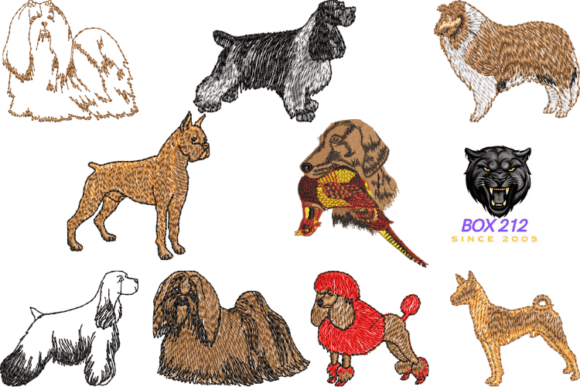
Dog Embroidery Collection
First Impression: Playful, Versatile, and Instantly Relatable
As an embroidery designer who’s curated over 200 craft fair booths—and sold thousands of handmade items—I opened the Dog Embroidery Collection expecting charm. What I found was something sharper: a cohesive, emotionally resonant set that balances whimsy with wearability. It doesn’t lean heavily into “cute overload” or hyper-realism—instead, it feels warmly modern, gently rustic, and quietly premium. That’s gold at a craft fair. Shoppers don’t pause for overly complex narratives; they stop for joy, recognition, and quality cues. This collection delivers all three at a glance.
Where It Shines: Craft Fair-Ready Product Pairings
The Dog Embroidery Collection isn’t one-note—it’s modular by design. That versatility is critical when you’re packing a 6-foot table with limited square footage and maximum visual impact.
- Tote bags: A medium-sized dog silhouette (sitting, mid-wag, or side-profile) anchors beautifully on the front panel—large enough to read from three feet away, but not so dense it overwhelms the fabric.
- Aprons: The playful poses translate perfectly to bib-style embroidery—especially a curled-up pup near the pocket or a leaping terrier along the waistband. Feels handmade, not mass-produced.
- Tea towel embroidery: Smaller designs (like a paw + bone motif or minimalist dachshund outline) hold up well on textured cotton—we tested on unbleached linen-look towels, and clarity remained strong even after two washes.
- Embroidered patches: Several motifs are naturally patch-friendly—clean edges, balanced negative space, and no micro-details that vanish under iron-on backing. Ideal for swapping onto denim jackets or market bags.
- Pillow covers & small pouches: The variety of sizes and orientations means you can scale intelligently—no stretching or distortion needed. A single confident stitch line (like a curled tail or floppy ear) reads clearly at 3 inches wide.
What Buyers Actually Notice—And Why It Converts
In my booth, dog-themed items consistently outsell generic florals or abstracts—especially among women aged 28–55 shopping for gifts, self-treats, or pet memorabilia. The Dog Embroidery Collection taps directly into that emotional resonance without leaning on cliché. No cartoon bones or speech bubbles—just expressive, stylized dogs that feel personal, not promotional.
It also photographs exceptionally well for Etsy listings and social previews. Clean lines + intentional spacing = crisp printable mockups. No pixelation, no fuzzy edges—even in natural light shots taken on phone cameras. That matters when your thumbnail competes with 47 other “dog lover” listings.
Production Reality Check: What Works—and What Needs Caution
This isn’t a plug-and-stitch collection. As a working designer, I always ask: Can I batch-produce this without re-hooping every time? Will it survive a busy Saturday?
The Dog Embroidery Collection scores high on repeatability—but only if you respect its limits:
- Avoid dense stitch areas on thick fabrics: Some standing-dog motifs include layered fur texture. On heavy canvas tote bags, that density can pucker unless paired with cutaway stabilizer and reduced top tension.
- Watch tiny details on curved surfaces: That adorable “wink” eye detail? Lovely on flat tea towels—but disappears entirely on the crown of a baseball cap. Skip it there; use the simplified head-outline version instead.
- Small lettering? Not included—thankfully. The collection sticks to pure imagery, which avoids legibility pitfalls on dark fabric or textured weaves.
- Test contrast aggressively: Light thread on oatmeal linen looks soft and elevated—but the same thread on charcoal twill fades fast. Always run a 2-inch test swatch with your actual fabric + thread combo.
Booth Strength & Brand Consistency
At a crowded makers’ market, cohesion sells. The Dog Embroidery Collection supports strong branding—not because it’s rigid, but because its consistent line weight, shared proportions, and thoughtful negative space create visual rhythm across products. A pillow cover, apron, and patch all feel like part of the same family—even when stitched in different thread colors.
I arranged six items using just three motifs (a seated beagle, a bounding spaniel, and a minimalist paw) and added only neutral-toned fabrics—cream, slate, and warm taupe. The result? A display that looked intentional, elevated, and unmistakably *handmade*. No shouting. No clutter. Just quiet confidence.
Designer Notes You Can’t Skip
Before cutting your first production run, do these five things:
- Test the machine embroidery design on scrap fabric matching your final product’s weight and texture—especially for tea towel embroidery and embroidered patch backings.
- Confirm thread contrast under both daylight and indoor booth lighting. What reads as bold in your studio may vanish under fluorescent fair tent lights.
- Review spacing between elements—if stitching two dogs on a tote bag, ensure at least 1.5 inches of breathing room to prevent thread migration.
- Check hoop size compatibility. Some larger poses require a 5x7 hoop minimum—verify before ordering blank caps or narrow pouches.
- Inspect stitch density visually—not just in software. High-density fills need stronger stabilizer support, especially for commercial embroidery on stretchy or loosely woven fabrics.
Final Thought: A Smart, Scalable Asset for Creative Entrepreneurs
The Dog Embroidery Collection isn’t just another digital embroidery file. It’s a thoughtfully assembled toolkit for makers who sell finished products—not just files. It works for Etsy sellers building a pet-themed shop, boutique makers refreshing seasonal inventory, and craft fair vendors needing reliable crowd-pleasers that photograph well, stitch cleanly, and feel authentically handmade.
It fits neatly into the Animals category without feeling generic—and elevates Embroidery beyond craft technique into storytelling. Whether stitched on a $24 market bag or a $98 linen pillow cover, it carries warmth, intention, and quiet professionalism. That’s how repeat customers find you. That’s how your booth becomes the one people circle back to.