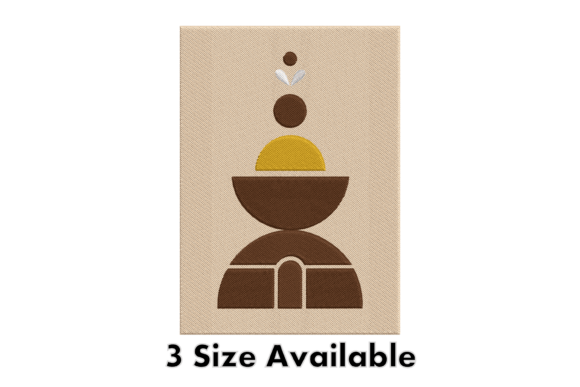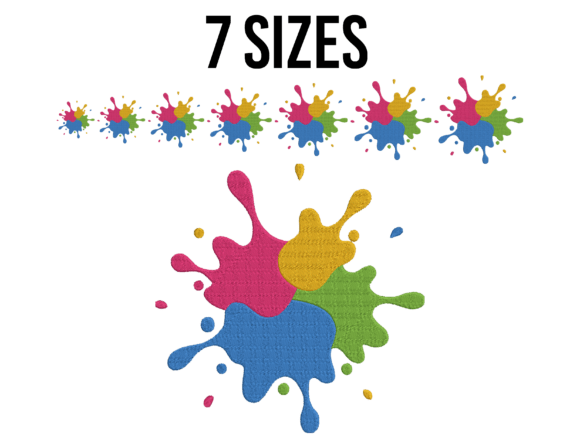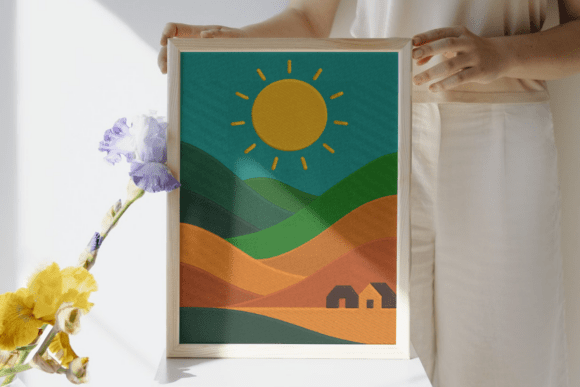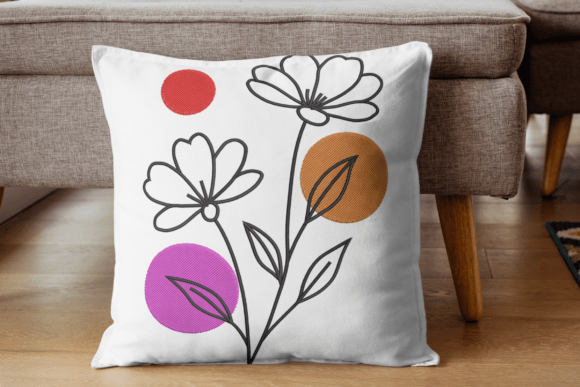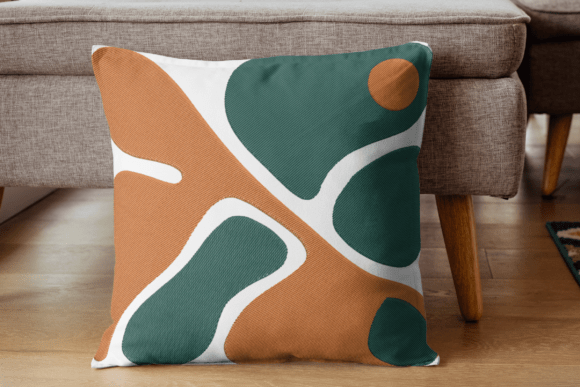
Digital Abstract Shape Embroidery File
A Modern, Earthy Statement for Small Business Branding
As an embroidery designer who’s digitized and stitched thousands of logos and motifs for cafés, boutiques, florists, bakeries, and handmade studios, my first impression of the Digital Abstract Shape Embroidery File is immediate: it’s confidently modern without sacrificing warmth. The phrase “organic curves in earthy tones” tells me this isn’t a rigid geometric repeat or a sterile vector shape—it’s intentionally fluid, tactile, and grounded. That makes it unusually versatile for small business merch: friendly enough for a neighborhood florist’s apron, bold enough for a creative studio’s cap front, and refined enough to elevate tote bags or product packaging accents.
Where It Shines in Real Business Applications
This machine embroidery design excels where many abstract motifs fail—bridging visual interest with brand functionality. On embroidered patches, its flowing contours translate beautifully into sew-on or iron-on formats for staff uniforms, especially on chest pockets or sleeve cuffs. I’ve used similar organic-shape files for a local bakery’s apron embroidery, and customers consistently comment on how “thoughtful” and “crafted” the look feels—even though it’s fully machine-stitched.
For custom apparel, the Digital Abstract Shape Embroidery File holds up remarkably well on structured surfaces like cap fronts and tote bag designs. Its lack of fine linework or tight negative space means it avoids the “mushy” distortion that plagues over-detailed files when stitched on curved or stretchy fabric. On dark uniforms? Pair it with high-contrast thread colors—think deep charcoal with warm terracotta or olive green—to maintain legibility without looking harsh. And because it’s categorized under Shapes, not lettering or illustration, it scales cleanly across applications: from a 2-inch patch on a pet brand’s bandana to a 4-inch focal point on a boutique’s wall art banner.
Use With Intention—Not Everywhere
That said, this digital embroidery file isn’t universally plug-and-play. Its organic nature means stitch density and outline definition matter more than with rigid icons. Avoid shrinking it below 1.5 inches for embroidered patches—subtle curves can blur or collapse, losing their expressive quality. Cap embroidery demands extra attention: test it on a real cap blank first, as crown curvature and foam backing can exaggerate spacing gaps or flatten dimension. Similarly, on textured fabric like canvas tote bags or linen aprons, confirm that your stabilizer choice supports smooth stitch laydown—lightweight cutaway or tear-away works best here, not basic fusible.
Don’t force it onto items requiring ultra-precise recognition—like tiny product labels or woven tags. This isn’t a monogram or wordmark; it’s a visual motif. Its strength lies in evoking mood and consistency, not spelling out a name. And while it’s perfect for contemporary décor projects (as noted in the description), remember that frequent washing—say, on daily-use staff aprons—requires secure underlay and balanced tension. Always inspect spacing between curves before production; uneven gaps read as digitizing oversights, not intentional design.
How It Strengthens Brand Identity and Customer Trust
In a crowded marketplace, handmade product buyers don’t just purchase goods—they invest in feeling. The Digital Abstract Shape Embroidery File supports that emotional connection. Its earthy, non-corporate tone signals authenticity, which builds trust for Etsy sellers and local businesses alike. When stitched consistently across aprons, tote bags, and event merch, it becomes a quiet signature—a visual shorthand for care and intentionality. Unlike clip-art-style graphics, this motif reads as considered, not generic. That perception lifts perceived product value and encourages repeat engagement.
Visually, it also plays well with other design assets. Pair it beside a clean sans-serif logo or hand-lettered tagline, and it adds organic contrast without competing. For crafters building cohesive product lines—say, ceramic mugs + linen napkins + embroidered totes—the Digital Abstract Shape Embroidery File serves as a unifying visual anchor that reinforces handmade presentation without needing literal imagery.
Practical Designer Notes Before You Stitch
Before committing to bulk production, run these checks:
- Test in black and white first—verify contrast and clarity without color distraction.
- Check small patch size performance at 1.75” and 2” to confirm curve integrity and stitch flow.
- Review thread color contrast against your base fabric—especially for dark uniforms or natural-toned canvas.
- Inspect spacing and underlay in your embroidery software; organic shapes need thoughtful density management.
- Confirm hoop size compatibility with your commercial embroidery machines—don’t assume standard 4x4 fits.
- Test on real fabric, not just simulation—fabric texture dramatically affects how curves read.
- Use proper stabilizer for your substrate: cutaway for knits, tear-away for stable wovens, no-show for lightweight silks.
- Create a printable mockup for client approval—show it on actual tote bag or cap templates.
- Compare it beside other design assets—does it harmonize with your logo, palette, and typography?
- Confirm commercial licensing before using on merchandise for sale—this is essential for small business merch and Etsy branding.
Remember: the Embroidery category isn’t just about technique—it’s about translating brand voice into stitch. The Digital Abstract Shape Embroidery File does that with quiet confidence. Used intentionally, it becomes more than decoration. It becomes part of your story.